
Cataract Surgery & Premium Intraocular Lenses
Modern cataract surgery not only restores lens transparency—it is also an opportunity to correct your refractive error (myopia, hyperopia, astigmatism, and presbyopia) with customized intraocular lenses.
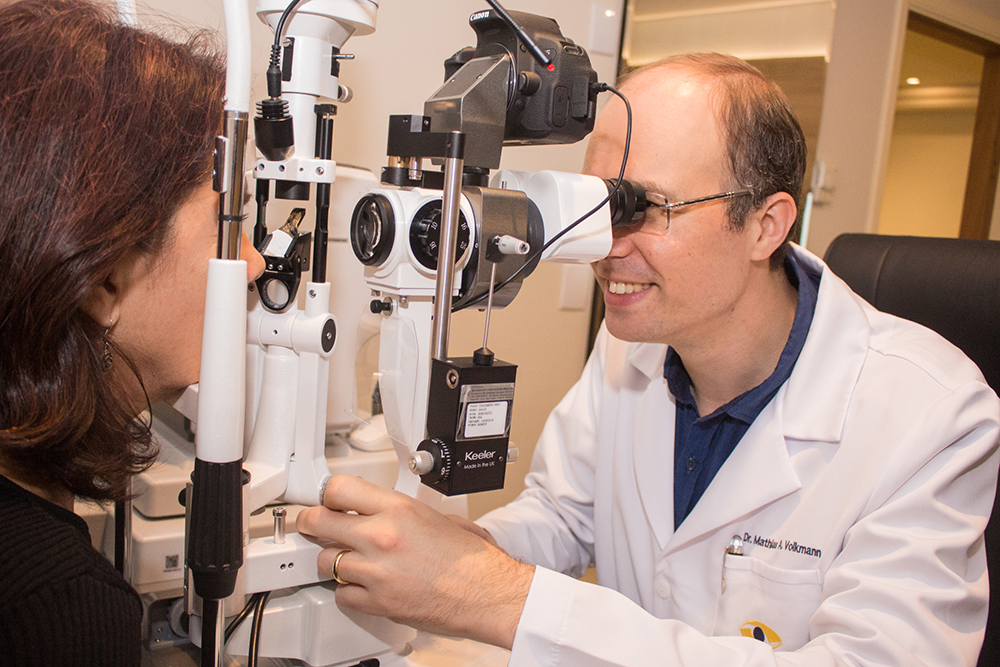
How Phacoemulsification Cataract Surgery Works
A cataract is the gradual clouding of the eye's natural lens (the crystalline lens), causing blurry vision, faded colors, glare around night lights, and frequent changes in eyeglass prescriptions. The definitive treatment is surgical: through micro-incisions of about 2 millimeters, ultrasound energy gently fragments and aspirates the cloudy lens (phacoemulsification), replacing it with a foldable intraocular lens.
Surgical Time & Comfort: The procedure takes an average of 8 to 25 minutes. Anesthesia is performed with anesthetic eye drops, an anesthetic block, and mild sedation for patient comfort, with hospital discharge shortly afterward.
Types of Premium Intraocular Lenses
Trifocal Lenses
Designed to provide clear focus at distance, intermediate (computer screen, car dashboard), and near (reading, smartphone), offering the highest level of independence from glasses for presbyopia.
Extended Depth of Focus (EDOF)
Create a continuous range of high-quality vision from far to intermediate distances and functional near vision, with minimal night halos or glare—an excellent option for frequent night drivers.
Toric Lenses
Specifically engineered to correct corneal astigmatism at the time of cataract surgery. Available in monofocal, EDOF, and trifocal platforms.
Pre-Operative Retinal OCT & Ocular Surface Preparation with iLUX
Before choosing a premium intraocular lens, a detailed evaluation of the macula using Optical Coherence Tomography (OCT) is essential. As a retina specialist, Dr. Mathias Volkmann evaluates whether the macula is completely healthy to take full advantage of multifocal or EDOF optics.
In addition, we assess the tear film and dry eye. We offer the iLUX treatment for Meibomian gland dysfunction: in patients with both dry eye and cataract, treating the ocular surface first yields much more accurate biometric measurements and a far superior visual outcome with premium lenses.
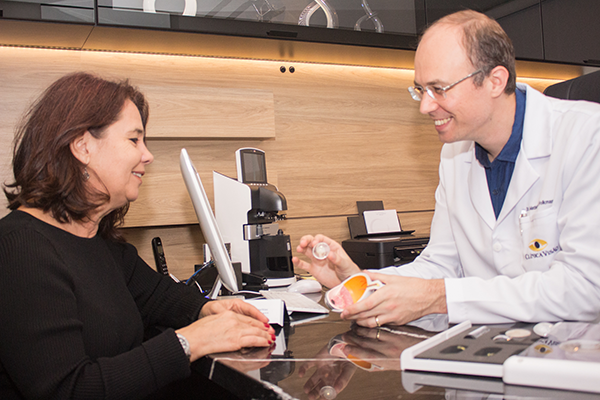
Posterior Capsule Opacification (YAG Laser)
Months or years after cataract surgery, the thin natural membrane supporting the lens may become cloudy, making vision blurry again. This is treated in minutes at the clinic with YAG Laser Posterior Capsulotomy, without incisions.
Frequently Asked Questions
Does cataract surgery hurt? How long does it take?
No. Anesthesia is performed using anesthetic eye drops, an anesthetic block, and mild sedation for patient comfort. The surgical time averages between 8 and 25 minutes, and the patient returns home the same day.
Are both eyes operated on the same day?
Usually, each eye is operated on separate days, a few days apart, for enhanced safety and to evaluate the response of the first eye.
Can a cataract grow back after surgery?
No, the cataract itself never returns because the natural lens has been removed. What can occur months or years later is an opacification of the capsule that holds the intraocular lens, which is easily resolved in the office with a quick, painless YAG Laser procedure.
Will I never need glasses again with a premium lens?
Premium lenses (trifocal, EDOF, and toric) greatly reduce or eliminate the need for glasses in daily activities. During your pre-operative exam, we evaluate your retina, cornea, and tear film to select the lens that best matches your visual routine.
Why is treating dry eye before cataract surgery so important?
A healthy tear film is essential both for accurate biometric lens calculations and for the final quality of vision. When a patient has dry eye and cataract, treating the ocular surface first—including with iLUX technology—provides a far superior visual result with premium lenses.
How long is the recovery after cataract surgery?
Vision typically improves within the first few days. Most patients can resume light daily activities, reading, and watching television quickly, while avoiding rubbing the eye, heavy lifting, or swimming pools for the period advised.